
The History of Women's Gatherings and Why They Matter
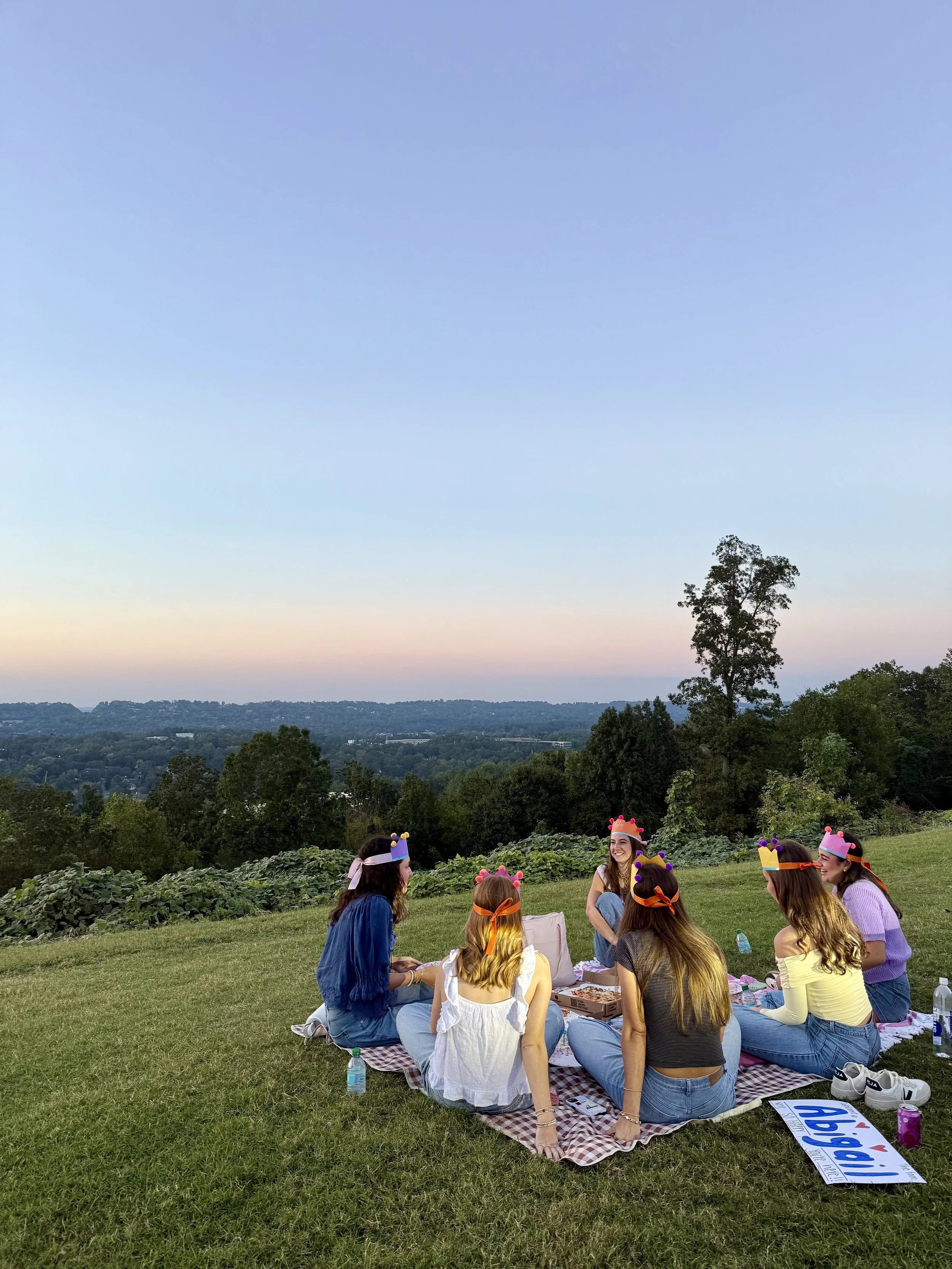
Source : Mary Michael Tane | Dupe
There is something that happens when women come together in a room and close the door. The conversation changes. The quality of the listening changes. Something in the air relaxes. And what gets said, what actually gets said, tends to be the real stuff.
This has always been true. Long before anyone was writing think pieces about the loneliness epidemic or the importance of female community, women were gathering. In circles around quilting frames, in candlelit Parisian drawing rooms, in church halls and back parlors and, eventually, community centers and book clubs and kitchen tables that somehow turned into something more. The forms have changed. The need hasn't.
Understanding the long history behind women's gatherings isn't just interesting. It's a reminder that what you're reaching for when you crave real connection with other women isn't new or frivolous. It's ancient, it's necessary, and it has quietly shaped the world more than most history books let on.
The Quilting Bee: Community Disguised as Productivity
Quilting bees and sewing circles are probably the first thing that comes to mind when you think about historical women's gatherings, and for good reason. They were, for centuries, one of the most significant social institutions in women's lives, and they were hiding in plain sight.
On the surface, a quilting bee was practical. Women gathered to collectively complete a large quilt in a single day, work that would have taken one person weeks alone. But the quilting was almost beside the point. As historians of American women's social history note, quilting bees became safe spaces where women could speak freely, share news, offer support, and discuss things they couldn't say in mixed company. They were, in effect, the original women's circles.
And they were far from apolitical. By the 1830s, abolitionist women were using sewing circles to organize anti-slavery fundraising and keep political ideas circulating in communities where women had no formal access to public life. Susan B. Anthony reportedly gave some of her first speeches on women's rights at quilting bees as a teenager. During both World Wars, quilting circles produced goods for the front while sustaining the emotional fabric of communities left behind. In 1966, the Freedom Quilting Bee in Alabama became an economic cooperative for Black women during the Civil Rights era, generating income and preserving communal tradition in the same breath.
The needle and thread were never just about the quilt. They were about the women holding them.
The Literary Salon: Where Women Shaped the World of Ideas
On the other side of the Atlantic, a different kind of gathering was quietly transforming culture. The literary salon, at its peak in 17th and 18th century Paris, was one of the most intellectually significant institutions of the Enlightenment, and it was almost entirely driven by women.
Historians of European culture describe the salonnières, the women who hosted these gatherings, as wielding genuine cultural and political power in a society that officially denied them access to either. They selected the guests, set the agenda, directed the conversation, and created the conditions in which some of the most transformative ideas of the modern world were debated and refined. At a time when women couldn't attend university or vote or hold public office, they were running the rooms where revolutions were born.
The Marquise de Rambouillet, widely credited with launching the salon tradition in her famous chambre bleue in 1618, gathered the Paris intelligentsia in her home when she was too ill to go out into society. Madame Geoffrin, a century later, hosted the philosophers and artists behind the Encyclopédie, one of the most ambitious intellectual projects of the Enlightenment. Across the Channel, Elizabeth Montagu's Bluestocking Circle in London put female intellect on equal footing with male scholarship, at least within the walls of her drawing room.
These women understood something that modern community-builders are rediscovering: that the space you create matters as much as the people you invite into it. And that gathering, done intentionally, is its own form of power.
Women's Clubs: Education as Resistance
By the late 19th century, the gathering of women had taken on a new form, and a new urgency. Women's clubs emerged across America and Europe as something between a book club and a social movement, places where women gathered to educate themselves in an era when formal education was largely closed to them.
JSTOR's research on the history of women's book clubs traces how clubs like Sorosis, founded in 1868 after a group of female journalists were barred from a New York Press Club event honoring Charles Dickens, became a direct response to exclusion. Women who weren't allowed in the official rooms simply built their own. Within decades, women's clubs had opened public libraries, funded scholarships, established trade schools, and generated the kind of civic infrastructure that entire communities relied on.
They were reading groups in name. In practice, they were engines of change.
The Consciousness-Raising Circle: Friendship as Political Act
By the 1960s and 70s, women's gatherings had become explicitly political in a different way. The consciousness-raising groups of second-wave feminism brought women together in small circles to share personal experiences and, in doing so, discover that what felt like private struggles were in fact collective ones.
The insight that emerged from these circles, that the personal is political, became one of the most influential ideas of the 20th century. And it came not from a lecture hall or a manifesto but from women sitting in living rooms, telling the truth about their lives to other women who were finally really listening.
This is what women's gatherings have always done at their best. They create the conditions for honesty. And honesty, in a room full of people who understand what you're talking about, has a way of becoming something much larger than itself.
What This History Is Telling Us
Here's what strikes me when I look at this long thread of women gathering across centuries and cultures. In almost every era, women's gatherings were either dismissed as trivial or quietly feared as dangerous. Sewing circles were domestic, harmless. Except that they were organizing abolitionist networks. Literary salons were just idle socializing. Except that they were shaping Enlightenment thought. Women's clubs were quaint self-improvement projects. Except that they were building civic infrastructure.
The power of women gathering together has almost always been underestimated by the people doing the underestimating. The women themselves tended to know exactly what they were doing.
Why It Matters Right Now
We are living through a moment that calls for exactly the kind of connection these gatherings have always provided. Loneliness is at a documented high. Community has thinned. The informal structures that used to create belonging naturally have eroded for many of us.
The research on what female community does for wellbeing is genuinely striking. And yet most of us treat gathering as a nice idea we'll get to eventually, something to schedule when things slow down rather than something that sustains us through the busyness.
But every quilting bee, every salon, every consciousness-raising circle was also a group of busy women who decided, despite everything else pulling at them, that gathering mattered. That showing up for each other mattered. That the conversation you could only have in a room full of women who got it was worth protecting.
They were right then. They're right now.
If you've been thinking about how to build that kind of community in your own life, you're part of a tradition that stretches back centuries. You don't have to call it a circle or a salon or a bee. You just have to start it.
