
What Women Actually Talk About When Men Aren't Around
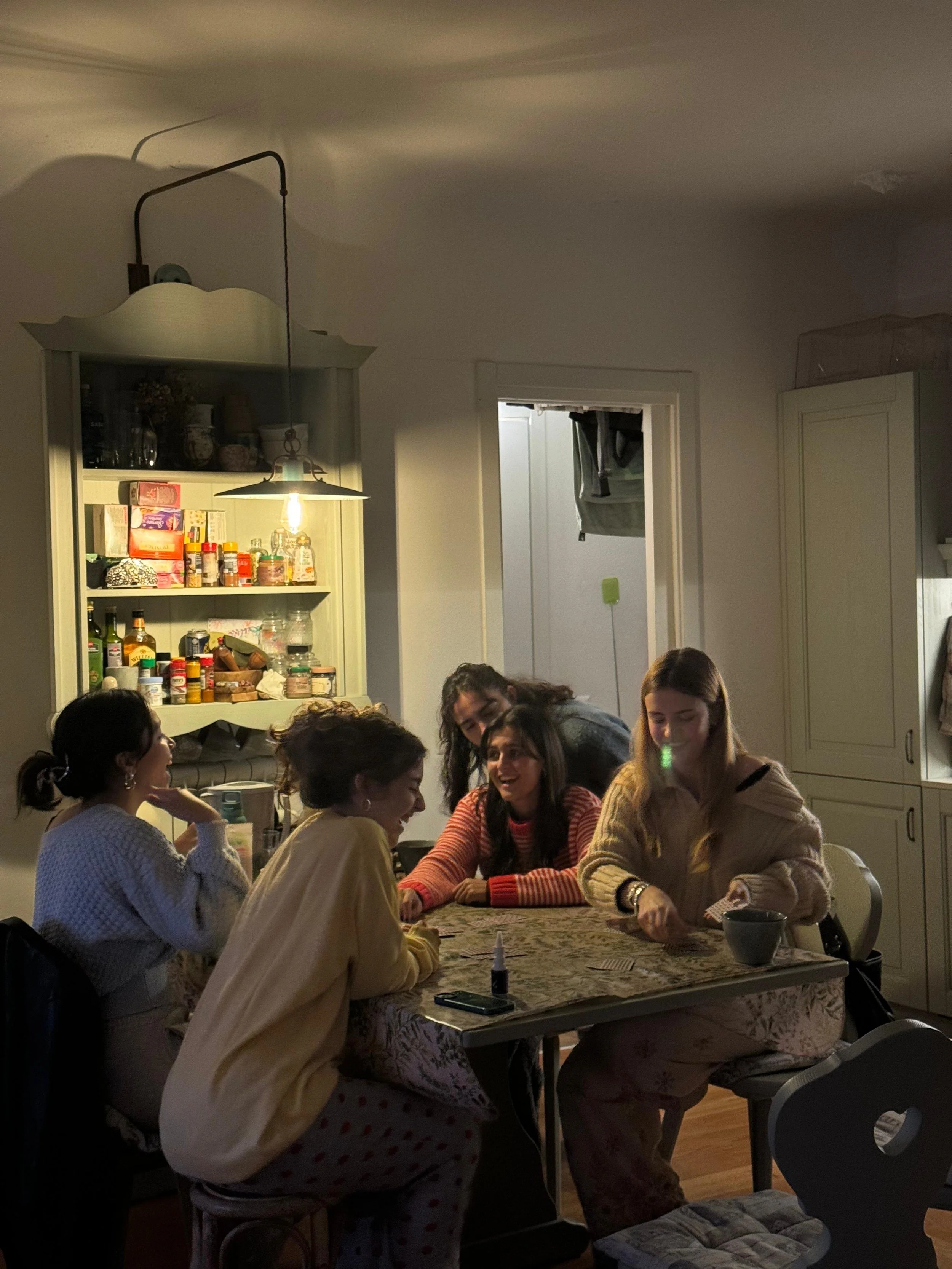
Source: Catarina Blima | Dupe
Picture it: a quiet Saturday evening, a bottle of wine already open, someone's living room with the lights turned low enough to feel cozy but bright enough to see everyone's faces. The group text that started with "anyone free tonight?" turned into this, somehow. And within twenty minutes of everyone arriving, the conversation goes somewhere real.
No small talk. No warm-up. Just: okay, but what's actually going on with you?
There are magical conversations that happen in women-only spaces, and if you've been lucky enough to be inside one, you already know what I mean. It's not gossip (okay fine… sometimes it's a little gossip). It's not complaining. It's something richer and harder to name, the kind of talking that leaves you feeling genuinely lighter and genuinely seen.
What women talk about when men aren't around is one of those topics people joke about, but the reality is far more interesting and far more moving than the punchline suggests.
The Vulnerability That Comes Out Nowhere
It usually starts with one person being honest. Someone says something like, "I've really been struggling lately," and the room shifts. Not in a heavy, uncomfortable way. In a relieving way.
Because everyone else in the room has been waiting for permission to say the same thing.
Women's friendships have a well-documented capacity for emotional depth. Research by Dr. Shelley Taylor and her team at UCLA, published in Psychological Review, proposed that women under stress tend to "tend and befriend," seeking social connection as a coping response, which may partly explain why female friendships so naturally become spaces for honest emotional sharing.
In these conversations, you'll hear things that people haven't told anyone else. Career doubts they haven't voiced to their partners. Worries about their bodies, their mothers, their futures. The fear that they're somehow falling behind in a life they can't quite define.
And the thing is, nobody flinches. Nobody offers a solution. Everyone just listens. That's the part that's hard to explain to someone who hasn't experienced it. The listening itself is the gift.
Dreams Get Their Moment Too
It's not all heavy. Not even close.
One of the most joyful things about women's friendships and real conversations is that dreams get airtime. Real dreams. Not the ones you've edited for public consumption, but the ones you've been silently carrying around like a folded-up note you keep meaning to open.
Someone mentions they've been thinking about going back to school. Someone else says they've had this idea for a business for three years and they've never told anyone. Another person confesses, a little shyly, that she thinks she might actually want to move to another city… or country? She's not sure.
And instead of being met with "but what about your job?" or "isn't that risky?", the room says: tell me more.
That's the thing about these conversations. They're not transactional. Nobody is managing their image or trying to sound impressive. You get to want things out loud, maybe for the first time, without being immediately talked out of them.
The Fears We Don't Usually Name
Here's where things get quieter and more important.
Women talk about fear in these spaces in a way that's almost impossible to replicate anywhere else. Not generalized anxiety, but the specific, nameable fears that feel too vulnerable or too small to bring up in other contexts.
The fear of choosing the wrong path and not finding out until it's too late. The fear of becoming someone you don't recognize. The fear that you're too much, or somehow not enough, or that you've been performing a version of yourself for so long you've lost track of which parts are real.
These aren't dramatic confessions. They're said in a subtle, almost offhand way, between refilling glasses or passing a snack. But they land. Everyone in the room has felt some version of that exact thing.
Studies on emotional intimacy in friendships consistently show that women report higher levels of self-disclosure in close friendships compared to other social relationships. There's a reason for that. These spaces feel safe enough for the truth.
And once one person names a fear, something opens up. Suddenly everyone is admitting to things they've kept tucked away. The conversation becomes less about solving anything and more about recognizing each other. Oh, you feel that too? I thought it was just me.
It is never just you.
The Laughter That Comes After
Here's what people get wrong about women's conversations: they assume the depth and the laughter are separate things.
They're not.
Some of the funniest conversations happen right after the most honest ones. Someone shares something painful and then immediately makes a joke about it, and everyone laughs, and it's not deflection. It's relief. It's the kind of humor that only works when you trust the people you're with.
Research published in Philosophical Transactions of the Royal Society found that laughter activates the brain's endorphin system and increases the sense of bonding between people who laugh together, particularly among women in group settings.
In women's spaces, laughter tends to be generous and inclusive rather than sharp. It's laughing at shared experiences, at the absurdity of being alive and trying your best, at the exhaustion of being a woman navigating a world that sometimes feels like it was designed to be slightly inconvenient.
There's something healing about laughing with people who understand exactly why it's funny.
What Makes These Conversations Different
It's worth sitting with why these conversations feel different from the ones we have in mixed company, or in professional settings, or even in one-on-one friendships.
Part of it is the group dynamic. Something about being in a room of women creates a kind of collective permission to be real. There's less performance, less monitoring, and less of the energy that comes with wanting to be perceived in a particular way.
Part of it is trust built over time. These conversations don't happen with strangers. They happen with people you've chosen, repeatedly, who have chosen you back. Deepening your close friendships over years creates a kind of shorthand, where you can say half a sentence and have someone already nodding.
And part of it, honestly, is that women have been practicing emotional fluency for most of their lives. Not because it's innate, but because it's been encouraged, expected, and necessary. The conversations that happen when men aren't around are often just what happens when that fluency has full room to run.
Why These Spaces Matter
If you have a group of women in your life with whom you can be genuinely honest, you have something rare and worth protecting.
These conversations, the vulnerable ones, the dream-filled ones, the funny ones, do something important. They remind you that you're not alone in any of it. That your fears are human. That your dreams are real. That you're allowed to want things and struggle with things and laugh at things simultaneously.
Making time for meaningful connection with the women in your life isn't indulgent. It's genuinely good for you, and good for them too.
So if you haven't had one of those conversations in a while, the ones that go somewhere real, maybe it's time to send the text. Open the wine. Turn the lights down just enough.
You know how it goes from there.
