
How to Create a Home That Feels Calm, Clean, and Intentional
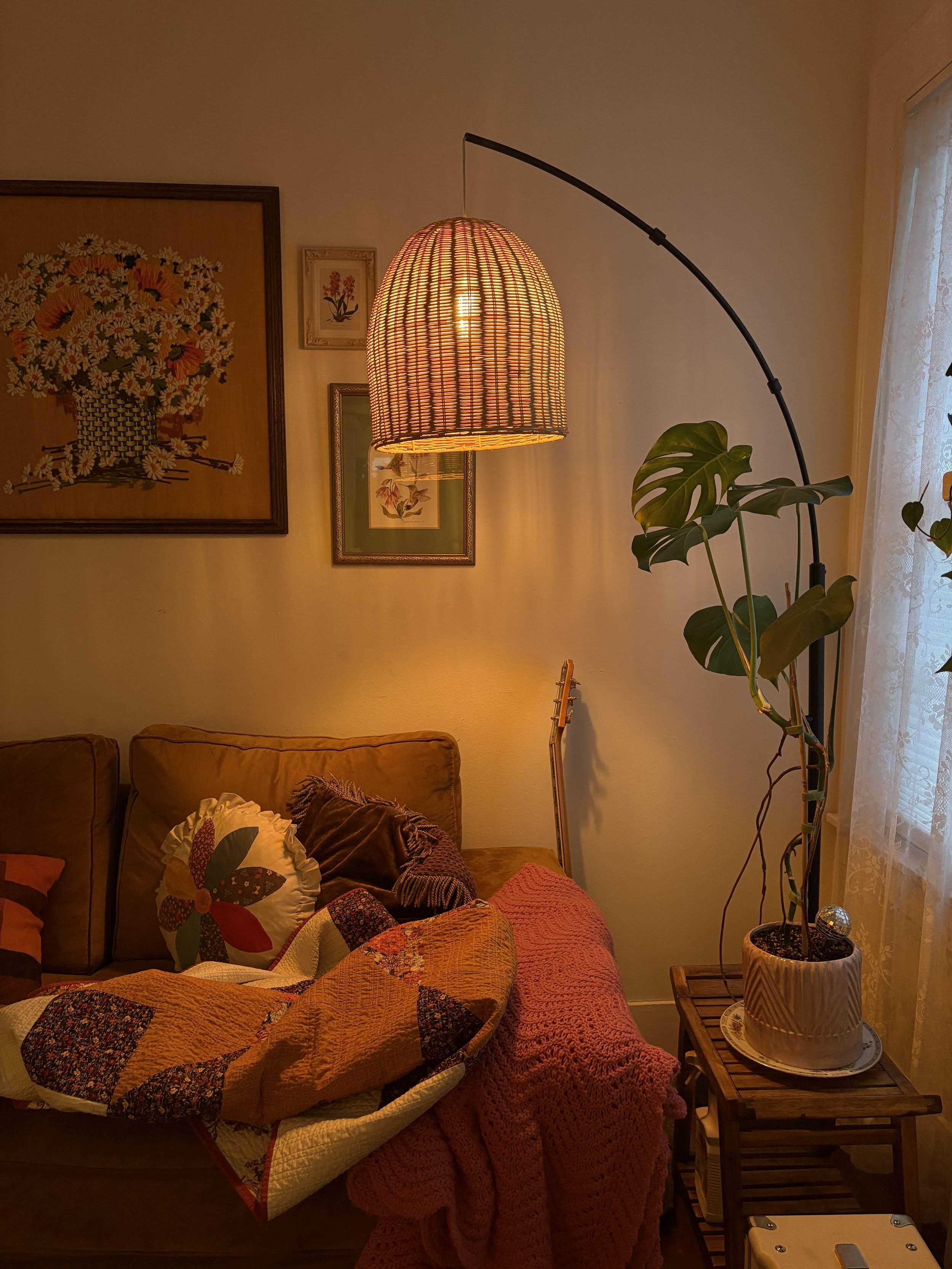
Source: Olivia Havener | Dupe
If you’re anything like me, you imagine a home that feels like your very own cozy little pocket of the world. It may not be worthy of a magazine spread or a perfectly curated Instagram grid, but it’s a space that feels like it's made just for you. Somewhere you walk into and let the stress fall away. Somewhere that feels tidy without feeling sterile, personal without feeling cluttered, and like a real reflection of the life you're trying to build.
Many of us don't live in that home yet. We live in an almost-there version of it that has too many things on the counter, a junk drawer that's so full it can hardly be shut, and a bedroom that looks peaceful in photos but doesn't quite feel peaceful in person.
The good news is that creating a calm, intentional home doesn't require a renovation, a new aesthetic, or buying anything at all. It usually just requires a few small, deliberate shifts in how you're relating to the space you already have.
Why Your Home Environment Affects You More Than You Think
Before we get into the how, it's worth pausing on the why, because the connection between your home and your mental state is more direct than most people realize. And it turns out that both modern psychology and a nearly 5,000-year-old practice have been pointing to the same thing.
Research published in the Journal of Environmental Psychology found that people who perceived their homes as more cluttered reported higher levels of negative emotion, lower life satisfaction, and reduced overall wellbeing. A separate study of dual-income couples found that women living in cluttered homes had measurably higher levels of cortisol, the body's primary stress hormone, throughout the day.
Feng shui, the ancient Chinese practice of harmonizing your environment with your wellbeing, arrived at the same conclusion long before the research did. At its core, feng shui is built around the concept of chi, the life-force energy that flows through every space we inhabit. When a home is open, ordered, and intentionally arranged, chi moves freely, and people who live there feel nourished, grounded, and supported. When a space is cluttered, stagnant, or disorganized, chi becomes blocked. Feng shui calls this sha chi, and its effects, fatigue, a low mood, a vague sense of being stuck, map almost exactly to what modern stress research now confirms.
The overlap is not a coincidence. Disorganized, visually noisy spaces create cognitive overload, the brain struggling to decide where to focus, which keeps you in a low-grade state of tension even when you're trying to relax. A clutter-free, well-considered space does the opposite. It allows both the nervous system and the chi to settle, and the difference is something you feel the moment you walk through the door.
You don't need to become a minimalist or a feng shui expert to benefit from any of this. You just need to understand that what's around you matters, and that a few intentional changes can genuinely change how you feel when you're at home.
Start With One Surface, Not the Whole House
The single most paralyzing thing about home organization is the feeling that you have to do all of it at once. You don't. In fact, trying to overhaul everything in a weekend is exactly the approach that leads to giving up by Sunday afternoon and living with a pile of "to-decide" items in the corner for the next three months.
Instead, start with one surface. Perhaps your kitchen counter, your bedside table, or the shelf by the door where things seem to naturally accumulate. Just one place, cleared and cleaned, can shift how an entire room feels. There's a reason this approach works: the brain reads a single clear surface as visual quiet, a signal that the space is under control, and that signal is disproportionately calming compared to the small effort it takes to create it.
Once one surface feels good, move to the next. Let the momentum build naturally rather than forcing it all at once.
Give Everything a Home (Or Let It Go)
One of my absolute favorite pieces of home organization advice I've ever heard is surprisingly simple: a place for everything, and everything in its place (my best friend will confirm this because I say it all the time). This is important because if something doesn't have a place to live, it will create clutter forever. The clutter in most homes isn't really about having too much stuff. It's about having stuff with nowhere to go.
Now before you go searching for another 9 cube organizer, hear me out… the fix may not be buying more storage. Instead, it may be deciding that something doesn't actually belong in your life anymore. A good rule of thumb: if you can't find a logical home for something, and you haven't used it in the last few months, it probably doesn't need to stay.
For things that do belong, create a system that works with how you actually live, not how you think you should live. If your keys always land on the kitchen counter, put a small dish on the kitchen counter. Work with your natural habits instead of fighting them.
Reduce Visual Noise in the Rooms You Spend the Most Time In
Visual noise is the design world's term for too many things competing for your attention in the same space. Too many colors, too many surfaces covered in objects, too many unrelated things grouped together. It's one of the main reasons a room can feel vaguely stressful even when it's technically clean.
You can reduce visual noise without emptying a room. A few simple approaches: group similar items together instead of scattering them across surfaces. Choose a neutral backdrop where possible and let a few intentional objects create interest. Give your eye a place to rest. Soft, muted colors are generally calming. Natural materials like wood, linen, clay, and ceramic, bring warmth without adding visual chaos.
The rooms worth prioritizing first are the ones where you start and end your day. Your bedroom especially. The state of your sleep environment has a direct effect on your nervous system, and it's worth investing a little effort in making it feel genuinely calm rather than just acceptably tidy.
Be Intentional About What You Bring In
One of the easiest ways to create an intentional home is to become more deliberate about what you allow into it in the first place. Clutter doesn't usually arrive all at once. It accumulates gradually. An impulse purchase here, a thing kept "just in case" there, plus that gift that doesn't fit your life but feels wrong to release.
Before something new comes in, it's worth asking a few simple questions:
Do I genuinely love this or need it?
Do I have a place for it?
Does it work with the space and the life I'm trying to create?
This isn't about scarcity or deprivation. It's about curation. A home filled with things you actually chose feels fundamentally different from a home filled with things that just ended up there.
If you're also thinking about the materials in your home, this connects naturally with making low-tox swaps that actually matter. Being intentional about what you bring in extends to the quality and composition of what you're bringing in too.
Clean With Rhythm, Not Obligation
There's a meaningful difference between cleaning as a chore you're enduring and cleaning as a small act of care for your space and yourself. The shift is mostly mental, but it's real, and it makes a difference in how sustainable your habits become.
Building short cleaning rhythms into your day, rather than saving everything for a major weekly clean, tends to make the whole thing feel lighter. A ten-minute tidy before bed. Wiping down the kitchen while the kettle boils. Putting things back as you go rather than letting them pile up until the pile feels daunting.
Lighting a candle while you clean or putting on a playlist you love aren't frivolous additions to a chore. They're small rituals that help you participate in your home rather than just manage it. If you're drawn to the idea of slow living rituals, the way you care for your space is one of the most natural places to practice them.
Make the Air in Your Home Feel Good
Your home's air quality is something most people don't think about until it becomes a problem, but it's one of the less obvious things that affects how a space feels to be in. A few simple practices make a real difference.
Open your windows regularly, even for just ten minutes. Ventilation is one of the simplest and most effective ways to improve indoor air quality. If you use scented candles or air fresheners, try choosing cleaner alternatives like beeswax candles, essential oil sprays, or simmer pots with citrus and herbs, that make the air in your home feel genuinely nourishing rather than chemically freshened.
Bringing plants in helps too. Even a few low-maintenance plants on a windowsill add visual calm and a sense of life to a space that can feel flat without them. Pothos, snake plants, and peace lilies are all forgiving options that don't require much maintenance to thrive.
Create Small Pockets of Beauty
An intentional home isn't just about removing what doesn't serve you. It's also about adding small things that bring genuine pleasure.
This doesn't have to mean expensive. It means paying attention to the details that make a space feel cared for: a candle you actually love, eucalyptus hanging in the shower, a small bouquet of flowers on the dining table.
These small moments of beauty are not decorating. They're the difference between a home that feels inhabited and a home that feels lived in and loved. You know the difference when you feel it.
Let Your Home Reflect the Life You Actually Want
The deepest layer of creating a home that feels intentional is alignment: making sure the space around you reflects the person you're becoming, not just the person you've been.
This might mean letting go of things that belonged to an older version of yourself. It might mean bringing in something that reflects where you're headed. It might even mean rearranging things so a room works better for how you actually spend your time now, not how you used to.
Your home is not a fixed thing. It can grow and change with you. And the more it genuinely reflects your values, your rhythms, and your real daily life, the more it will feel like a place that actually supports you.
Living more intentionally starts with the small choices you make throughout the day, and few things offer more daily opportunities for intentional choice than the space you come home to.
You Don't Need a Perfect Home to Feel at Home
Here's what I want you to hold onto: a calm, intentional home isn't a finished product. It's a practice that evolves with you. It doesn't require perfection, a specific aesthetic, or a significant budget.
It simply requires attention. A willingness to notice what's working and what isn't. The patience to make small, deliberate changes and let them compound over time.
Clear one surface. Open a window. Put your favorite things somewhere you'll actually see them. Start there and let the rest follow.
