
12 Slow Living Rituals for Everyday Life
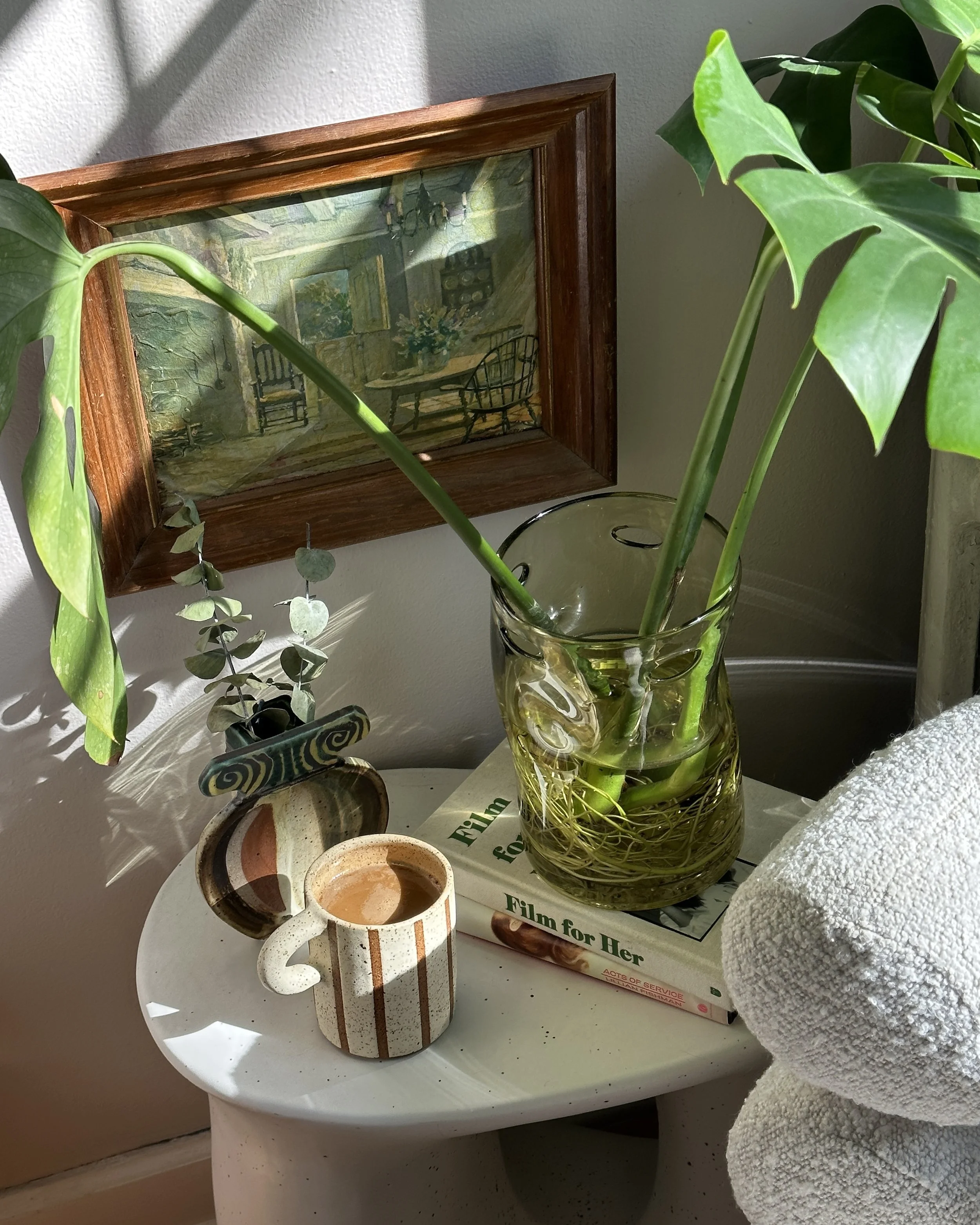
Source : Becky T | Dupe
Here's something worth admitting: most of us are living at a pace that doesn't actually feel good. Not because anything is wrong, exactly, but because the speed of modern life has a way of carrying you along whether you've chosen it or not. You look up and it's somehow Friday. You look up again and it's somehow October. And somewhere in the blur, you realize you haven't actually tasted your coffee in weeks.
Slow living isn't a productivity hack or a wellness trend you have to buy into. It's more like a quiet decision to actually inhabit your life instead of just rushing through it. Research on mindfulness and present-moment awareness consistently finds that people who slow down and live more deliberately report that time feels fuller, richer, and more expansive, not because they have more of it, but because they're actually in it.
You don't have to move to the countryside or delete your phone to live more slowly. You just need a few rituals. Small, intentional anchors that bring you back to the present before the day runs off without you.
Here are twelve worth trying.
1. Start Your Morning Before Your Phone Does
The first few minutes of your morning set the emotional tone for everything that follows. And most of us spend them handing our nervous system directly to whatever the internet has decided is urgent today.
Try giving yourself even ten minutes before you look at your phone. Lie there for a moment. Breathe. Notice what the light looks like. Let yourself arrive in the day before the day starts demanding things from you. It sounds small. It genuinely isn't.
2. Make Your Coffee or Tea a Ceremony
This is one of the most accessible slow living rituals there is, and one of the most quietly transformative. Not because there's anything magic about coffee, but because the act of making something by hand, slowly and with full attention, is a practice in being present.
Grind the beans. Boil the water. Watch the bloom if you're using a pour-over. Use the good mug. Sit down and actually drink it before it gets cold. Research on savoring, the practice of deliberately attending to and appreciating positive experiences, consistently links it to greater happiness and life satisfaction. Your morning coffee is a perfectly reasonable place to start.
3. Spend Time Outside Every Single Day
This one is non-negotiable if you're serious about slowing down. There is something about being outside, in actual air, under actual sky, that recalibrates the nervous system in a way that nothing indoors can fully replicate.
It doesn't have to be a hike. A ten-minute walk around the block. Sitting on your porch with your coffee. Eating lunch outside instead of at your desk. Just being in the natural world, even briefly, even in a city, does something genuinely restorative to your body and your brain. If you can get your bare feet on actual grass or soil occasionally, even better.
4. Cook Something From Scratch
Few things will slow you down and ground you faster than cooking a real meal from real ingredients. Not a complicated recipe necessarily, just something that requires you to chop and stir and pay attention. Something that smells good while it's cooking. Something made from whole ingredients you actually recognize.
The slow food movement, which is where so much of slow living philosophy originates, understood this instinctively. Cooking connects you to the seasons, to your body's actual needs, to the satisfaction of making something nourishing with your own hands. It's also a very good excuse to visit your local farmers market, which is a slow living ritual all on its own.
5. Build a Phone-Free Window Into Every Day
Constant connectivity creates a kind of low-grade overwhelm that most of us have become so accustomed to we've stopped noticing it. The solution isn't perfection or a dramatic digital detox. It's just carving out one window each day where you're not available to your phone.
An hour in the morning. The last hour before bed. Meals, always meals. Wherever you can protect a stretch of time that belongs fully to you, your thoughts, and the people physically in front of you, that space becomes one of the most restoring parts of your day.
6. Do One Thing at a Time
Multitasking is a myth that makes us feel productive while quietly making everything worse. Research on focused attention consistently shows that doing one thing at a time with full presence improves both the quality of the work and the quality of the experience of doing it.
This week, try doing just one thing at a time for even a few hours a day. Eat without scrolling. Walk without a podcast. Have a conversation without half your attention elsewhere. The practice is harder than it sounds. And the relief it produces is also bigger than you'd expect.
7. Keep a Small Gratitude or Reflection Practice
Not a complicated journaling system. Just a quiet moment each day, morning or evening, where you notice what's actually good. What you're grateful for. What you're looking forward to. What felt meaningful today, even in a small way.
A University of Bath study found that just ten minutes of daily mindfulness practice, which includes reflective writing, reduced depression by nearly 20% and improved overall wellbeing significantly compared to a control group. The benefits were also sustained after the practice ended. Ten minutes. That's it.
8. Tend Something Living
A garden, a windowsill herb pot, a single houseplant you water with actual care. Something alive that requires your attention and rewards your presence.
There's a reason so many women who lean toward a more natural, grounded way of living are also drawn to growing things. Tending a living thing forces you into the present tense. It asks you to pay attention to what's actually happening, right now, in the physical world. And the satisfaction of cooking with herbs you grew yourself, or cutting flowers you planted, is quietly profound in a way that's hard to explain until you've done it.
9. Create a Transition Ritual Between Work and the Rest of Your Life
One of the losses of the modern workday, especially for those who work from home, is the absence of a natural transition between work life and personal life. The commute, for all its inconveniences, used to serve a real psychological purpose. It gave you time to shift.
Build something intentional to replace it. A short walk when you close your laptop. Changing your clothes. Making tea. Lighting a candle. Anything that signals to your nervous system: that part of the day is done, and this new part is beginning. The ritual matters more than what it is.
10. Have a Weekly Ritual That Anchors the Week
Something you do every week, on the same day, that belongs to you. The Sunday farmers market. A Saturday morning bake. A weekly bath with something good in it. A Friday evening walk that marks the end of the working week.
The research on routines and mental wellbeing makes a distinction that's worth understanding. A routine is something you do on autopilot. A ritual is the same action done with intention and attention. The difference between them isn't the action. It's the presence you bring to it. Weekly rituals create a rhythm that grounds you inside a life that can otherwise feel like it's moving too fast to hold onto.
11. Gather Slowly and Deliberately
One of the most underrated slow living practices is being intentional about how you spend time with other people. A long dinner with no agenda. A walk with a friend where neither of you is rushing to be somewhere else. A gathering in someone's home where phones stay in bags and the conversation actually goes somewhere.
Slow socializing, the kind where you're actually present with the people in front of you, is its own form of nourishment. And in a culture of overscheduled, half-present social plans, a truly unhurried evening with people you love is genuinely countercultural and deeply restorative.
12. End Your Day With Intention
How you close a day matters. Not in a rigid or performative way, but in the same spirit as everything else on this list: with a little more presence than you'd otherwise bring.
A short walk as the light changes. Turning off the overhead lights and lighting a candle. Reading an actual book instead of scrolling. A few minutes of stillness before sleep. The way your evenings feel shapes how your mornings begin, and how your mornings begin shapes, in quiet but cumulative ways, the whole texture of your life.
You don't have to do all twelve of these. You don't have to do them perfectly or consistently or in any particular order. Just pick one, the one that feels most natural right now, and start there. The slowness builds from the inside out. And once you've tasted it, the rush becomes a lot easier to resist.
