
I Tried a Non-Toxic Cookware Upgrade—Here's What I'd Recommend Instead of Teflon
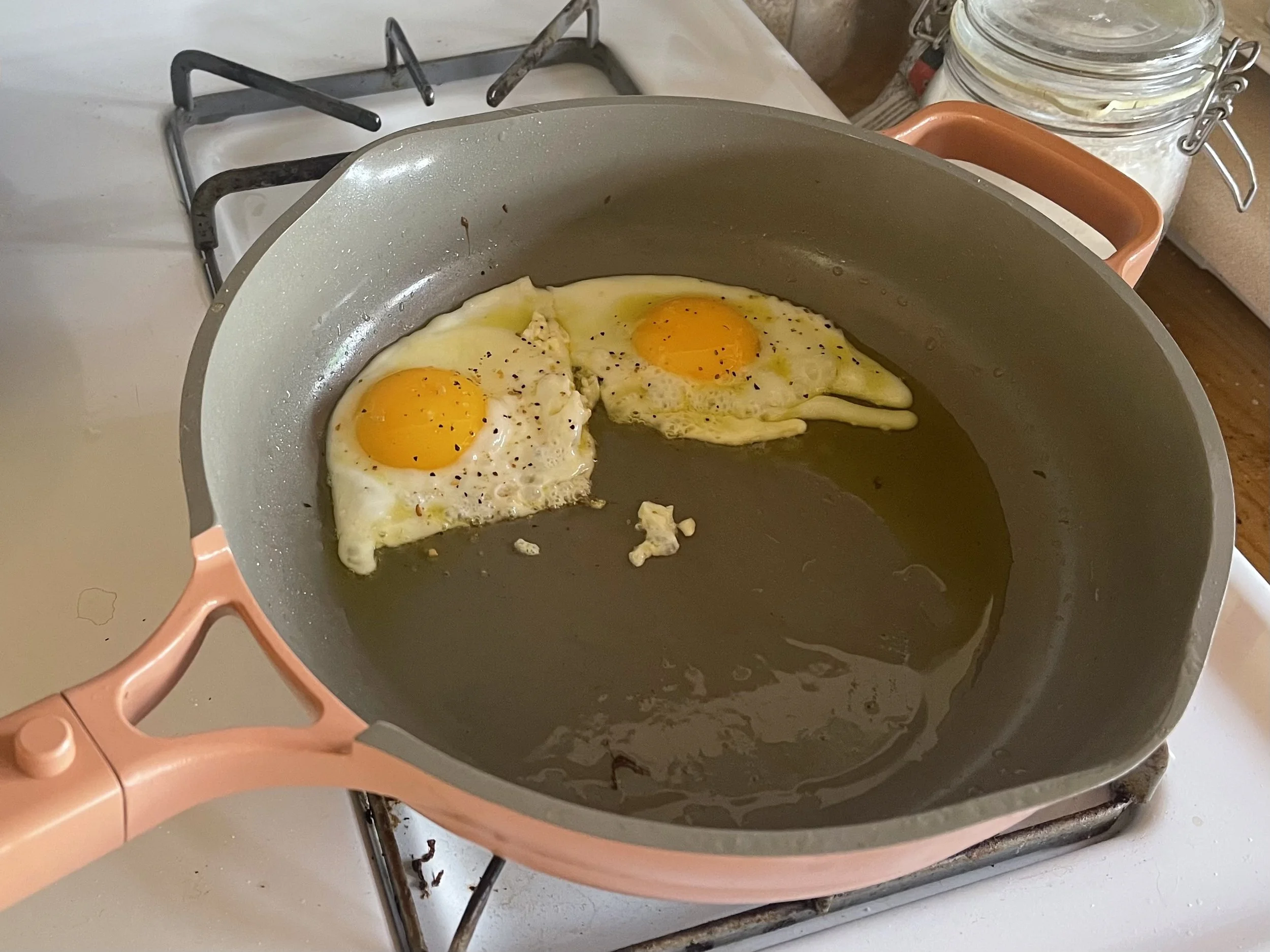
I had been meaning to ditch my old Teflon pans for years. Like, genuinely years. Every few months I'd fall down a rabbit hole about PFAS and forever chemicals and convince myself I was going to finally do something about it, and then I'd close the tab and go make dinner in the same scratched-up non-stick pan I'd had for way too long.
And then my best friend went and made the decision for me. She got me the Our Place Always Pan for Christmas, and honestly… it changed everything and I regret not making the change sooner.
So I did the thing I probably should have done years earlier and started actually learning about what's in conventional non-stick cookware, what makes a pan genuinely non-toxic, and what's worth buying if you're trying to clean up your kitchen. Here's everything I found out, and what I'd actually recommend.
First, Why Is Teflon a Problem?
Okay, I certainly don’t want to come off preachy about this because honestly I used Teflon pans forever and I think most of us do without realizing. But here's the short version.
Traditional non-stick coatings use PTFE, which is the chemical commonly known as Teflon. When those pans get scratched or overheated, they can release fumes that are genuinely awful. The chemical PFOA, which was used in making PTFE, has already been banned in the US due to links to health concerns. And the broader family of chemicals, PFAS, also known as "forever chemicals," don't break down in the environment or in the body over time.
The sneaky thing is that many "PFOA-free" pans still contain other PFAS chemicals, so "we removed one bad thing" doesn't automatically mean clean.
None of this means you need to throw everything out today. But if your pans are old and scratched, or you're ready for an upgrade anyway, cookware is one of those areas where a thoughtful swap makes a real difference, and it doesn't have to be overwhelming. If you're curious about where kitchen upgrades fit into the bigger picture of reducing everyday chemical exposure, these low-tox swaps that actually make a difference are a great place to get oriented.
What Actually Makes a Pan Non-Toxic?
The main categories worth knowing about:
Ceramic-coated pans use a mineral-based coating instead of PTFE. Free from PFAS, PFOA, lead, and cadmium. Great for everyday cooking, easy to clean, gentle to use. Honest caveat: the coating does wear down over time, so these aren't forever pans, but they're a meaningful upgrade from Teflon.
Cast iron is one of the most naturally non-toxic cooking surfaces around. No coating, no chemicals, seasoned with oil. It's been around literally forever and will outlast everything else in your kitchen.
Stainless steel is another completely chemical-free option. It takes a little more technique (preheat properly, use enough fat), but it's incredible for searing and basically indestructible.
The Our Place Always Pan: My Actual Review
My husband, the head chef in our family, uses this pan every day. And I want to be clear, he is very picky about his cookware and he loves this one.
The Our Place Always Pan uses a proprietary ceramic coating called Thermakind, which is made without PFAS, PTFE, PFOA, lead, or cadmium. It's built on recycled aluminum, which makes it lightweight and heats up fast and evenly. It also comes with a steamer basket, a lid, and a beechwood spatula that all nest together in a way that's incredibly satisfying. It also looks good enough to leave on the stove, which honestly matters to a lot given the limited space in our home.
The non-stick? Works beautifully. Eggs slide out, nothing sticks, cleanup is a quick wipe. Even after months of almost-daily use, it's holding up really well.
The honest notes: like all ceramic-coated pans, this isn't a high-heat pan. Medium heat is your friend, and you want wooden or silicone utensils only. Scratching the coating is what shortens its life most, so no metal and no dishwasher.
And full transparency, there's also been some discussion online about the fact that Our Place doesn't publish their third-party testing results publicly, which is worth knowing. They say they test rigorously, but compared to brands like Caraway that hand over test reports on request, they aren’t quite as forthcoming. For us, it hasn't been a dealbreaker, but it's worth mentioning.
Still, as a gift? It's a 10 out of 10. Beautiful, practical, and a real upgrade from anything with Teflon on it.
Other Non-Toxic Options Worth Knowing About
If you're building out your kitchen or replacing things as they wear out, here's what I'd point you toward depending on what you need.
Caraway Fry Pan — The Transparent Ceramic Option
Caraway is basically the gold standard in ceramic non-stick right now, and a big reason for that is their transparency. They actually publish third-party test results and will send them to you if you ask. The coating is free of PTFE, PFOA, PFAS, lead, and cadmium, independently verified.
The fry pan is gorgeous, comes in about a thousand colors, and is a dream for eggs, sautéed vegetables, and pancakes. It's oven-safe up to 550°F, which is higher than most ceramic options. The non-stick is seriously good, and multiple people I know are still using their Caraway sets daily two or three years in.
Same ceramic-pan rules apply though: medium heat, soft utensils, hand wash only.
Lodge Classic Cast Iron Skillet — The Forever Pan
If you want the cookware equivalent of "buy it once, use it for the rest of your life," this is it. Lodge's pre-seasoned cast iron has zero coating, zero chemicals, and zero reason to ever be replaced. It's made in the USA, costs around $30, and genuinely gets better the more you use it.
It's not the easiest pan to start with if you've never cooked with cast iron. It doesn't love delicate things like scrambled eggs until it's really well seasoned, and it's heavy. But for searing meat, roasting vegetables, baking cornbread, or anything that benefits from serious heat retention? There is no better option.
Maintenance is simpler than people make it sound, by the way. Rinse, dry immediately, rub with a little oil, done. My husband treats his like a prized possession.
Caraway Enameled Cast Iron Skillet — Cast Iron Without the Fuss
If you love the idea of cast iron but don't want to deal with seasoning and oiling every time, enameled cast iron is the answer. The enamel coating protects the surface so you clean it like a normal pan, and it's completely free of forever chemicals.
Caraway's version is beautiful, extremely sturdy, and works on all stovetops including induction. It's heavier than the ceramic-coated pans, but it holds heat incredibly well and you can actually sear in it, which is something you genuinely can't do with a ceramic coating.
What I'd Actually Recommend Based on Your Kitchen
If you want a beautiful, approachable non-toxic upgrade that feels easy to use every day, the Our Place Always Pan is a strong starter option.
If you want the cleanest transparency and best-documented non-toxic credentials, Caraway is the move. Their willingness to share third-party testing puts them above most of the competition.
If you want something that will genuinely last decades and never need replacing, get a Lodge cast iron skillet. It's $30, made in America, and you can leave it to your kids someday.
And if you're building a kitchen from scratch, I'd probably do a combination: a ceramic-coated fry pan for everyday cooking, a cast iron or enameled cast iron for high-heat cooking, and a stainless steel saucepan for anything acidic or liquid. Thinking about your cookware is also one of the most natural places to start if you're trying to make your home feel genuinely cleaner and more intentional, because it's something you interact with multiple times a day.
One More Thing: Replace As You Go
You don't have to throw out every pan you own today. If your current pans are unscratched, you can still use them carefully on low heat while you build out your collection gradually. Replace things as they wear out, starting with whatever you reach for most.
Start with one pan. The rest will follow.
And if someone in your life is looking for a gift idea, send them this article. My best friend got it exactly right.
