
10 Easy Low-Tox Swaps That Actually Make a Difference
Source: Casey Knox | Dupe
If you've ever looked into low-tox living and immediately felt like you needed to replace your entire house, throw out everything in your pantry, and audit every product you own, same. The internet does not make this easy. One scroll through certain corners of wellness content and suddenly you're convinced your candles are trying to hurt you, your cookware is a liability, and your laundry detergent is the enemy.
Here's the truth: easy low-tox swaps don't have to be an all-or-nothing project. You don't need a perfectly clean home to make meaningful changes. You just need a good place to start, and a realistic sense of what actually matters.
This isn't about fear or perfection. It's about making a few more thoughtful choices in the places you interact with most, your cleaning routine, your kitchen, your sleep space, your water, your daily products, and letting that be enough. Because it is.
Here are 10 swaps that are genuinely worth making, starting with the ones that tend to have the most impact.
1. Swap Conventional Cleaning Products for Safer Everyday Basics
This is one of the most impactful places to start because cleaning products are something most of us use constantly, and many conventional formulas contain synthetic fragrance, unnecessary dyes, and harsh chemicals that can irritate your respiratory system over time.
The good news is that the cleaner alternatives work really well, and you don't need a different product for every single surface. We recommend starting with your most used products first like an all purpose cleaner, laundry detergent, or dish soap. Everything else can follow as you run out naturally. We highly recommend ÁTHOS cleaning products. Not only are they non toxic and biodegradable but their product is one of the best we’ve tried for really getting surfaces clean. Their bathroom cleaner works well to help cut through grime and soap scum leaving your bathroom with a clean peppermint scent. ÁTHOS multi purpose cleaner is great for everyday use and, for those who can be a little sensitive to scents, they offer an unscented version as well. Their grapefruit and lemon are some of our favorites leaving behind a soft, subtle scent. ÁTHOS products are currently sold on their website only. For some great big box retailers products we recommend Branch Basics, Molly Suds, Dr. Bronner’ Sal Suds, and Blueland are other great non toxic options.
2. Swap Synthetic Fragrance for Cleaner Alternatives at Home
This one may surprise some people, but synthetic fragrance is one of the more significant sources of indoor air pollution in most homes. It shows up in candles, plug-ins, dryer sheets, room sprays, perfume, and body products, often under the single word "fragrance" on the label, which can represent a mix of dozens of undisclosed chemicals.
Research published in Environmental Impact Assessment Review found that fragranced consumer products emit volatile organic compounds (VOCs), and that nearly every product tested emitted at least one chemical classified as toxic or hazardous under U.S. federal law, while fewer than 3% of those chemicals were disclosed on product labels.
Ditch the plug-ins and dryer sheets first. These two things can be an inexpensive way to replace the most common daily source of synthetic fragrance exposure at home. Low-tox doesn't mean your home has to smell like nothing. It just means being more selective. Fontana Candle Co. makes beautiful coconut and beeswax candles with clean fragrance. For dryer sheets, Friendsheep wool dryer balls are a practical and effective swap. For those of you who love your scented room sprays, Primally Pure makes one from essential oils that smells like an expensive spa without any of the ingredient concerns. If you are looking for a more eco-friendly alternative, a simmer pot with citrus, herbs, and cinnamon is a great way to make your home smell warm and cozy.
3. Start Taking Your Shoes Off at the Door
This one is completely free and wildly underrated.
Shoes track pesticides, heavy metals, outdoor pollutants, and bacteria from every surface you've walked on throughout the day. Leaving them at the door is one of the simplest low-tox habits you can start. A doormat, a shoe tray, and a pair of cozy house slippers are all you need to make this feel like a welcoming ritual rather than a chore. If you do nothing else from this list, this is the habit to start today.
4. Swap Plastic Food Storage for Glass, Especially for Hot Foods
Plastic food containers are one of the most common everyday exposures people choose to reduce first, and for good reason. Storing hot, oily, or acidic food in plastic, or reheating it in plastic containers, can leach the plastic into your food. Nobody wants to eat plastic even in micro amounts.
You don't need to throw out every container you own overnight. Start with what you use for leftovers and reheating. Pyrex and Anchor Hocking are both excellent, widely accessible options that last for years and don't ask you to spend a lot. Stasher bags are a great reusable swap for zip-lock bags, especially for snacks and freezer storage.
5. Swap Plastic Water Bottles for Filtered Water and Better Storage
Water is something you consume every single day, which makes it a smart place to focus some attention. If you're regularly drinking from single-use plastic bottles, switching to a stainless steel or glass bottle paired with a basic water filter is a meaningful upgrade.
For filtration, there are three tiers worth knowing about. For a beginner-friendly starting point, Brita Elite is widely available and genuinely better than no filter, even if it's more of an entry-level option. For a stronger pitcher filter with better published contaminant testing, Epic Water Filters is worth the small step up. And if you want to invest in a more robust countertop option, AquaTru is one of the most trusted systems available. The best filter is always the one you'll actually use consistently.
If a filtration setup isn't realistic right now, even switching away from single-use plastic bottles to glass, or a reusable stainless-steel option filled from a filtered source will make a difference.
6. Swap Ultra-Processed Snacks for Simpler, Lower-Ingredient Options
Low-tox living isn't only about what you clean with. It's also about what you eat regularly, and even a slight reduction in ultra-processed, additive-heavy foods can make a real difference over time.
This isn't about food obsession or eliminating anything you love. It's about noticing patterns and making small, realistic shifts. Reading labels and choosing the shorter ingredient list when you have two similar options is genuinely a good enough place to start.You can always keep it simple with fresh fruit, veggies, popcorn, nuts, plain yogurt, or sourdough which are naturally lower-effort, lower-ingredient choices that don't require a specialty store.
A few brands that make it easier without requiring a complete overhaul of your pantry: LesserEvil and Simple Mills for snacks with cleaner ingredient lists, Chomps for a convenient higher-protein option, Applegate for better-than-conventional deli and protein staples, and Jackson's and Barnana for satisfying grab-and-go snacks that actually have ingredients you can read.
7. Swap Polyester-Heavy Basics for Natural Fibers Where It Counts
Synthetic fabrics like polyester and nylon are essentially plastic textiles, which we don’t want the clothing we wear closest to our skin to absorb. Start with under garments, and everyday basics since we wear these for longer periods throughout the day. Everything else can shift gradually as things wear out.Organic cotton, linen, and wool are the most accessible natural alternatives. For accessible, well-priced options that don't feel like a sacrifice: Pact for everyday organic cotton basics, Quince for solid value across multiple natural fiber categories, Mate the Label for elevated closet staples with a strong low-tox positioning, and Subset if you want a smaller, more considered brand with a thoughtful approach to materials.
8. Swap Conventional Bedding for Better Sleep Surfaces Over Time
You spend around a third of your life in bed, so your sleep environment is a worthwhile place to improve. And don’t worry… this is one of those upgrades that doesn't have to happen overnight.
Quince and Coyuchi both offer beautiful organic cotton and linen options at different price points, and even starting with one organic cotton pillowcase or sheet set can make your sleep space feel noticeably better. Coyuchi in particular has strong materials, sustainability credentials, and a transparency you can actually trust. Quince is the more accessible starting point if you want something effective without spending a lot.
The fragrance-free laundry detergent you switched to in Step 1 will make your sleep environment better too. And when it is time to upgrade your mattress look for one made of organic or natural fiber materials. 9. Swap Plastic Kitchen Tools for Safer, Longer-Lasting Materials
Your kitchen is one of the easiest places to make low-tox upgrades because it involves daily food contact.
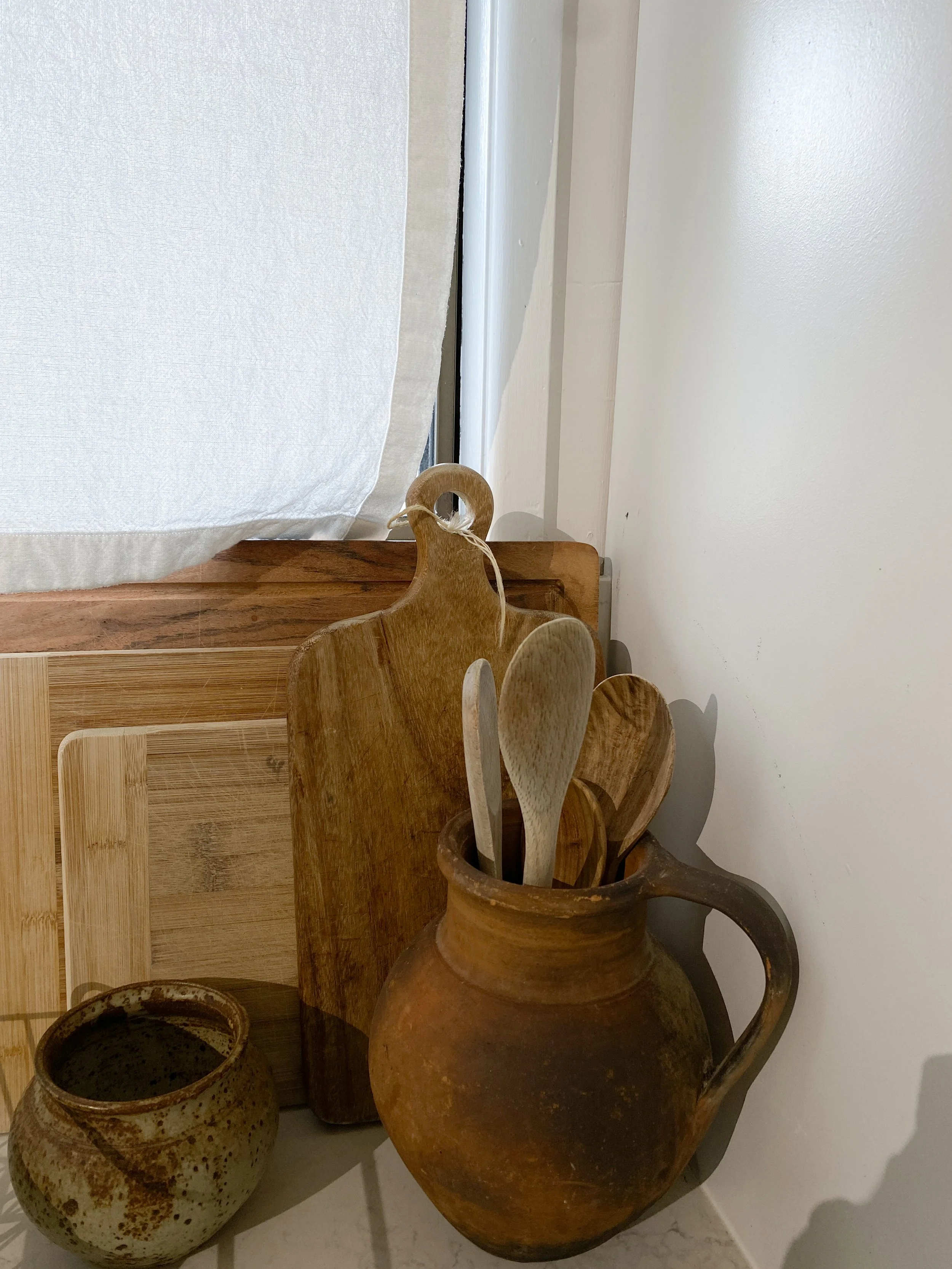
Plastic utensils and scratched nonstick pans are often the first things people swap out. Wooden or stainless steel utensils, cast iron, stainless pans, and glass measuring cups are all durable alternatives that tend to last much longer and are better for us.
10. Swap "Perfection" for a More Realistic Low-Tox Mindset
This one is the most important swap of all.If all of this feels like a lot, remember you don't need to do everything at once.
Low-tox living should support your life, not control it. It’s not about trying to build a perfect non toxic home. It’s just trying to make it a little more yours, and a little more supportive of the life you want to live. Maybe that's taking your shoes off at the door. Maybe it's swapping your dryer sheets for wool balls. Maybe it's grabbing a glass container next time your old one breaks. It’s a starting point to make a few more intentional choices in the places that matter most, and to feel good about that. Not every choice has to be perfect to still be meaningful. Progress over perfection is not a cliché here. It's a genuinely sustainable approach.
